


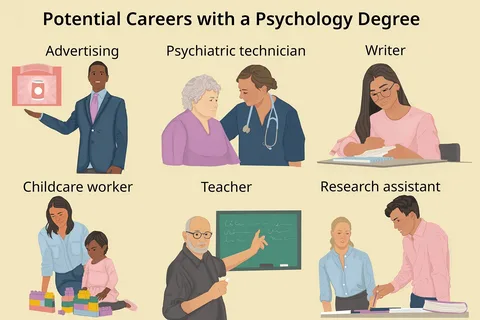
When you think about jobs you can get with a psychology degree, what comes to mind? A therapist or a school counselor might be the first career you think of — and that’s totally understandable. Studying how the mind works and what motivates people to act naturally parallels therapeutic and educational guidance.
But the list of psychology bachelor’s degree jobs extends far beyond what you might have even thought possible. In fact, psychology is a popular major — and one of those reasons is because there are so many jobs that are foundationally supported by this multifaceted discipline. Delving into the study of human behavior is not only fascinating, it’s valuable and actionable for many careers.
If you’re pondering this course of study but asking yourself, “What jobs can you get with a psychology degree?”, let this list of 8 ideas provide some inspiration!
- Christian-based mental health counselor or therapist: Mental health counselors provide psychotherapy and counseling to support their patients’ mental wellness for everyday life while aiding those suffering from trauma, depression, anxiety, anger, and other concerns. It’s important to realize that you can also specialize in Christian-based counseling in which you offer psychological healing within a biblical framework. It’s a way to address mental and spiritual health together in faith-based contexts. While a bachelor’s degree in psychology is often the first step, you will need a master’s degree to become a licensed professional counselor.
- Social worker: When you think of social work, child welfare, and human service agencies might immediately spring to mind. But social workers are also employed in various other settings, including healthcare and schools. In broad strokes, social workers help people prevent and cope with problems in their everyday lives. For example, a medical social worker helps patients understand their illness or condition and provides them with information and resources to cope with emotional, financial, and social needs that may arise. In a clinical setting, this career often requires an advanced degree.
- Teacher: If your interest in psychology coincides with a passion for leading the next generation, teaching might be a career path for you to consider. Whether you feel called to preschool, elementary school, special ed, or sharing your love of psychology with high schoolers, you’ll have an excellent foundational understanding of cognitive development across the ages and more. There are many Christian schools and academies to consider for those called to teach in a faith-based setting. In addition to your psychology degree, you’ll likely need a teaching license or certification.
- Career counselor: Your quest to find your best-fit career may have inspired you to think about being a career counselor. In this role, you help professionals choose jobs that correlate with their personal values, goals, and skills. Career planning strategies — like skills assessments and personality tests — often go hand-in-hand with this work, which can occur in various settings, from schools to outplacement, recruitment, and headhunting. Like clinical counseling, it’s possible to specialize in Christian career counseling and coaching, which situates the guidance in a faith-based way.
- Forensic psychologist: If you’ve never missed an episode of Criminal Minds, the field of forensic psychology may be for you. This career applies the principles of psychology to the criminal justice system, consulting with law enforcement to integrate psychology into both criminal and civil legal matters. You might serve as an advisor, help select juries, evaluate witnesses, conduct mental health evaluations, and more. While this career requires an advanced degree, there are other entry-level opportunities, including victim advocates and corrections specialists.
- Probation officer: Another option for those interested in the law enforcement field is a career as a probation officer. Probation officers can leverage soft skills learned while earning a psychology degree — like interpersonal awareness and critical thinking — to effectively work with first-time offenders and those who have committed nonviolent or minor crimes. In this role, you would also often conduct evaluations, give recommendations to judges, and perform regular check-ins with offenders.
- Advertising/marketing manager: Think about the ads that make an impact. What do they have in common?! They probably make you feel something; they generate an emotional connection. That’s why a psychology degree can be such an asset in this industry. Sure, you can also pursue a marketing or advertising degree, but understanding human behavior, persuasion, and motivation can be just as helpful in developing effective advertising and marketing campaigns.
- Sales representative or account executive: The sales industry may also not be the first thing that comes to mind when studying psychology, but it can be instrumental in fostering a successful sales career. That’s because emotional intelligence, effective communication, and empathy with a customer’s needs are all signs of a good seller — and skills you build with a psychology major
