


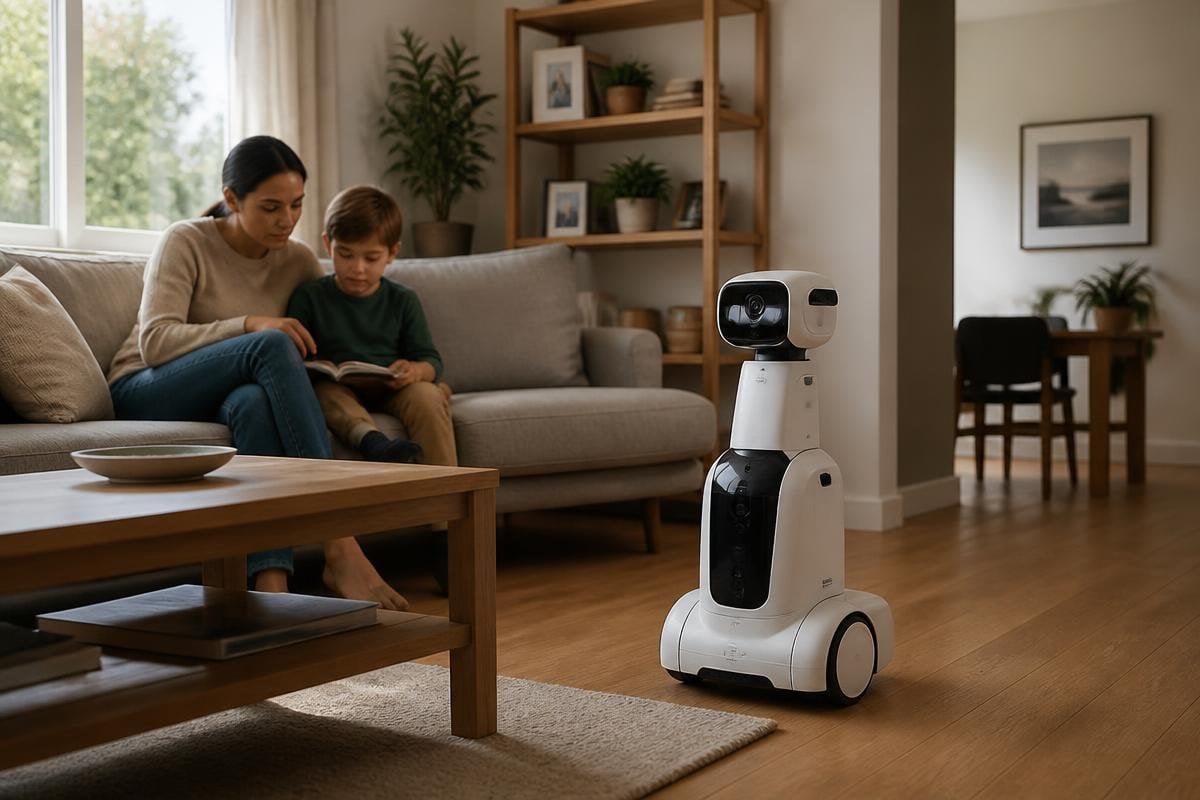
With a camera, a robot can enter a room, record a person, and send the footage elsewhere without asking. The machines may change how people work and live, but the first rules should cover consent, notice, control, and responsibility.
- People should know when a robot is recording.
- Owners should set a clear limit on stored data.
- A human should remain responsible for harmful actions.
People need notice before a robot records
Inside a home, shop, hospital, or street, a robot can collect more than its owner sees. Cameras may record faces, microphones may pick up private talk, and LiDAR can map rooms by measuring distance with laser pulses.
The rule should be simple: a robot must show when its sensors are active. A light, sound, or visible display can give that notice. The signal should remain easy to see from across a room, not hide in a phone menu.
People also need a way to refuse recording. In a private home, that may mean sending the robot to a marked area or switching off its sensors. In a public place, the rule may need a visible recording zone and a route around it.
Robots should identify their owner or operator, too. A person meeting a delivery robot or security robot needs to know who controls it and how to report a problem.
Data should have an owner and a clock
During an ordinary task, a robot can collect data. A floor-cleaning robot may map a flat, while a warehouse robot may record routes, obstacles, and worker movement. The task does not give the owner an open claim to keep every file forever.
A 24-hour deletion rule would cover routine sensor data unless a person asks for longer storage. The owner should state the reason, the storage location, and the date for deletion. A longer period may fit a safety investigation, but that exception needs a named person and a written record.
People should also be able to request a copy of data about them. The request should return readable files, not a screen full of machine codes.
If a robot uses a face image, voice recording, or movement record, the person should know that before the system makes a decision about them.
A rule only works when it fits the robot’s sensors, control system, and use. Robot24.com robotics reporting can connect those details to named machines and tests before the article turns to remote operators. The person at the controls still carries responsibility when the robot acts from far away.
A remote operator still counts as a person
Some robots act on their own for part of a task, then hand control to a remote operator. That change should never erase responsibility. The company that owns the robot needs a named operator on duty, a log of control changes, and a way to stop the machine.
The log should record the robot’s time, location, operating mode, and remote commands. A 30-day record would give a worker or resident enough time to report an incident without forcing the owner to store routine data forever.
Emergency stops need a shared design. A worker should find the button without a special app, and the stop should cut movement rather than send a request into a queue. Restarting the robot should require a deliberate local action after the cause has been checked.
I’d make the owner responsible for harm caused by a robot during its assigned task. That rule gives people one clear party to contact and gives owners a reason to check training, maintenance, and safety limits.
Robots need rules for public space
A robot moving near people should follow local speed limits, yield rules, and access needs. A small delivery robot may need to stop when a person blocks its route. A mobile camera robot may need to keep distance from doorways, queues, and private windows.
Public rules should cover sound as well. A robot that speaks, beeps, or announces a message can disturb homes and workplaces. Quiet hours and volume limits would make the machine easier to live beside.
The rules should also cover appearance and behavior. A robot must not pretend to be a person during a call, sale, or inspection. Its display or spoken message should identify the machine and state when a human operator joins.
A working checklist for owners and lawmakers
Use these points before a robot enters a shared space:
- Show recording status: place a visible light or screen where people can see it.
- Name the operator: publish a contact method and the owner’s legal name.
- Set deletion dates: erase routine sensor data after 24 hours unless a recorded reason extends storage.
- Keep control logs: record local and remote commands for 30 days after an incident.
- Test the stop button: check that it halts motion without an internet connection.
- Mark the robot: identify the machine before it speaks, records, or makes a decision.
These rules won’t answer every question. They give people a starting point while lawmakers, robot makers, and operators decide how each machine fits a real place. The next test is practical: can a person see, stop, and report a robot within one minute?
