


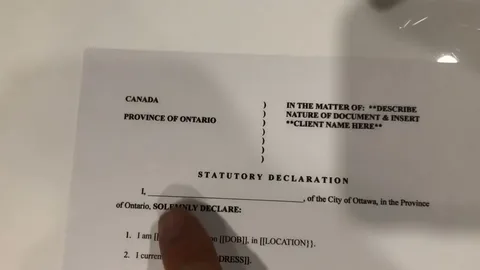
Immigration court hearings often involve multiple forms of evidence. While live testimony during a hearing is common, written declarations can also play an important role in explaining facts related to a case. These declarations allow individuals to provide detailed statements in writing that may support claims presented during immigration proceedings.
Written declarations help the court review information clearly and systematically.
What Is a Written Declaration?
A written declaration is a formal statement that describes events, circumstances, or personal experiences relevant to a legal case. These statements are typically prepared in advance and submitted to the court as part of the evidence.
Declarations may come from:
- The individual involved in the case
- Family members
- Witnesses who have direct knowledge of the situation
- Community members who can describe certain events
These written statements help provide context for the issues being examined by the court.
Why Declarations Are Used in Immigration Cases
Written declarations allow individuals to explain important details in a structured format. Because immigration hearings may involve limited time, declarations help ensure that relevant information is documented clearly.
These statements may describe personal history, travel details, or events that are central to the legal arguments presented during the case.
By reviewing written declarations, the immigration judge can better understand the circumstances surrounding the case.
How Judges Evaluate Declarations
Immigration judges examine written declarations alongside other forms of evidence submitted during the proceedings. The judge may compare the information contained in the declaration with documents, records, or testimony presented during the hearing.
When evaluating declarations, judges may consider:
- Whether the statement is detailed and consistent
- Whether it aligns with supporting documentation
- Whether the information appears credible
This evaluation helps the court determine how much weight to give the written statement.
Declarations and the Official Case Record
Once submitted, written declarations become part of the official case record maintained by the immigration court. This record includes all documents and evidence related to the case.
If the case later proceeds to an appeal, reviewing authorities such as the Board of Immigration Appeals (BIA) may examine these declarations as part of the record.
Because appeals rely on the existing documentation, declarations can remain important throughout the legal process.
Federal Court Review in Detention Situations
In some immigration matters, individuals remain in detention while their legal proceedings continue. When detention extends for a prolonged period, federal courts may review whether the custody is legally justified. In these situations, individuals sometimes seek assistance from a Habeas Corpus Lawyer who can determine whether filing a petition requesting federal court review of the detention may be appropriate.
These legal actions focus on custody issues rather than the written declarations used in immigration court.
Why Written Declarations Matter
Written declarations help organize important information in a clear format that the court can review carefully. By providing detailed explanations of events or circumstances, these statements help immigration judges evaluate the facts presented during the case.
They also ensure that relevant information becomes part of the official record.
Conclusion
Written declarations are a valuable form of evidence in immigration court proceedings. They allow individuals and witnesses to provide detailed statements that support the legal arguments presented in the case.
By reviewing these declarations alongside other evidence, immigration courts can better understand the facts involved and apply immigration law accordingly.
