


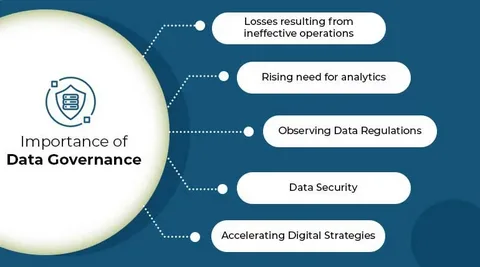
In many ways, a data analytics project resembles a bustling railway station. Trains (data) rush in from every direction—some delayed, some on time, some overcrowded, and others nearly empty. Without a station master, chaos is inevitable: trains collide, passengers miss their connections, and the entire system falters. Data governance plays the role of the station master. It brings order, discipline, and accountability to the fast-moving world of analytics, ensuring insights arrive safely and on schedule.
Building Trust Through Guardrails
Imagine a city where traffic lights stop working. At first, drivers might cautiously move through intersections, but soon confusion leads to accidents. In analytics projects, the absence of governance has the same effect—teams second-guess the accuracy of reports, decision-makers distrust dashboards, and projects stall. By setting up consistent rules for data ownership, access, and validation, governance becomes the “traffic light system” that prevents collisions of misinformation.
For learners stepping into structured training, whether through a Data Analytics Course in Hyderabad, this aspect is often emphasised. Without these guardrails, even the most sophisticated models risk running on flawed inputs, and businesses end up making costly mistakes.
Ensuring Data Quality Is Like Maintaining a Water Supply
Think of clean water flowing into a city. No matter how advanced the treatment plant is, if pipes are rusty or contaminated, residents suffer. In analytics, data quality is the water supply. Governance ensures that information remains accurate, complete, and timely at every stage. It establishes checks like master data management, audit trails, and data lineage—tools that guarantee purity from source to storage.
Students enrolling in a Data Analyst Course often discover that governance isn’t an optional add-on; it is the backbone that keeps predictive models, dashboards, and machine learning systems functioning without bias or error. Like water filters, governance quietly does the work that sustains the health of the entire ecosystem.
Regulatory Compliance: Avoiding Stormy Seas
Sailing without a compass or weather radar is reckless. In the ocean of modern business, regulatory compliance is the storm most companies fear. Whether it’s GDPR in Europe or India’s upcoming data protection laws, penalties for mishandling data are steep. Governance acts as the radar, steering projects safely through rough waters by enforcing rules around consent, retention, and usage.
It isn’t simply about avoiding fines—it is about protecting customer trust. A single breach of sensitive data can sink years of goodwill. Companies that take governance seriously send a strong signal: “We value your privacy, and we treat your information with the same care as our own assets.”
Collaboration: A Common Language for All
Picture a theatre troupe where every actor interprets the script differently. Chaos ensues, the performance fails, and the audience leaves confused. Data analytics projects can suffer the same fate when marketing, sales, finance, and IT each apply their own definitions. Governance provides a common script—clear business glossaries, metadata standards, and stewardship roles—that keeps everyone aligned.
This shared language ensures that a term like “active customer” means the same thing across departments. Governance removes ambiguity, replacing fragmented performances with coordinated storytelling that resonates with clarity.
Scaling for the Future
As organisations grow, so does their data landscape. What begins as a neat garden soon becomes a jungle of overlapping systems, unverified spreadsheets, and shadow IT. Governance acts as the gardener—pruning redundant processes, planting new rules, and nurturing sustainable growth. With governance in place, businesses can scale analytics without fear of losing control.
Graduates of a Data Analyst Course quickly see how governance supports scalability. By establishing clear access controls and repeatable data pipelines, organisations ensure that insights remain reliable, even as volumes and complexities expand.
Conclusion
In the grand railway station of data analytics, governance is the unseen hand that keeps trains running on time and passengers reaching their destinations. It transforms chaos into clarity, distrust into trust, and risk into resilience. Beyond compliance, it shapes how organisations collaborate, innovate, and scale. For those charting their journey—whether through a Data Analytics Course in Hyderabad or hands-on business experience—mastering governance is not optional. It is the ticket that ensures the entire analytics journey runs smoothly, today and tomorrow.
ExcelR – Data Science, Data Analytics and Business Analyst Course Training in Hyderabad
Address: Cyber Towers, PHASE-2, 5th Floor, Quadrant-2, HITEC City, Hyderabad, Telangana 500081
Phone: 096321 56744
