


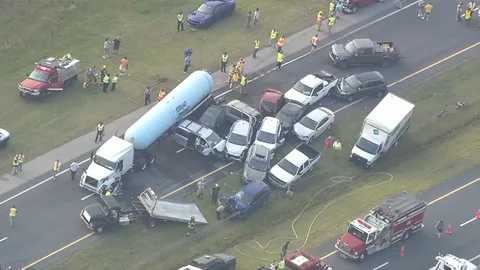
Chain-reaction car accidents are some of the most misunderstood crashes on Austin roads. At first glance, they may look simple—multiple vehicles, one impact after another. In reality, these collisions often raise complex questions about timing, responsibility, and causation that aren’t obvious from the police report alone.
Understanding how these accidents actually unfold helps explain why fault is frequently disputed and why outcomes can vary dramatically from one case to another.
Not Every Driver in a Chain Reaction Is Automatically at Fault
A common misconception is that the last car in a chain reaction is always responsible. While rear drivers are often liable, that isn’t always true.
Chain-reaction crashes may involve:
- sudden stops caused by the first vehicle
- unsafe lane changes that trigger braking
- mechanical failures
- distracted driving by more than one motorist
In some cases, the initial collision is the result of negligence, while later impacts are unavoidable responses rather than independent mistakes.
Timing Matters More Than Distance
In chain-reaction accidents, milliseconds matter.
Investigators often look at:
- how quickly each driver reacted
- whether braking occurred before impact
- spacing between vehicles at different moments
- whether the collision happened in stages or nearly simultaneously
Two cars may be close together, but if one driver had no reasonable opportunity to stop after the first impact, fault may not rest where people expect.
Why Police Reports Don’t Always Tell the Full Story
Police reports are important, but in multi-vehicle crashes they are often based on limited information gathered quickly at a chaotic scene.
Reports may:
- summarize events broadly
- rely on driver statements given under stress
- miss subtle timing differences between impacts
- avoid assigning definitive fault
This is why further analysis is often needed before liability is clear.
Vehicle Damage Patterns Can Reveal the Sequence
In chain-reaction crashes, damage patterns help establish the order of events.
Examples include:
- crushed zones that indicate multiple impacts
- mismatched damage heights between vehicles
- paint transfer showing impact direction
- deformation patterns revealing braking or rolling contact
These physical clues often show whether a driver was struck first, pushed forward, or hit after coming to a stop.
Insurance Companies Often Try to Minimize Their Share
When several vehicles are involved, insurers may:
- blame other drivers
- argue partial responsibility
- delay claims while liability is disputed
- offer reduced settlements based on shared fault
Each insurer tries to limit its exposure, which can leave injured drivers caught in the middle.
This is why people involved in complex multi-vehicle crashes often speak with an Austin, TX Car Accident Lawyer to understand how responsibility is actually determined when several drivers and insurers are involved.
Chain-Reaction Accidents Often Lead to More Severe Injuries
Even low-speed impacts can compound when multiple collisions occur in seconds.
Injuries commonly associated with chain reactions include:
- whiplash from repeated jolts
- spinal strain from sudden compression
- head injuries caused by multiple directional forces
- aggravated injuries due to being struck more than once
These injuries may not be obvious at the scene, especially when adrenaline is high.
Why These Cases Take Longer to Resolve
Chain-reaction claims often take more time because:
- liability must be divided or clarified
- multiple insurance policies are involved
- medical causation may be disputed
- vehicle inspections take longer
Patience and thorough documentation are often required before a fair resolution is reached.
Final Thoughts
Chain-reaction car accidents in Austin are rarely as straightforward as they appear. What looks like a simple rear-end crash can actually involve multiple decision points, split-second reactions, and competing insurance narratives.
Understanding how timing, vehicle movement, and evidence work together helps explain why these cases require careful evaluation—and why assumptions about fault don’t always match what really happened on the road.
